
Melbourne City has been the team to beat in the A-League this season, having stormed to their first A-League premiership, wrapping it up with a tense 1-0 victory over the Central Coast Mariners.
After a slow start under Patrick Kisnorbo, they excelled in a similar system that got them a second-place finish and to the grand final last season, with inverted fullbacks, quick ball movement with changes of possession and wide forwards.
This season, City have had the most shots on target per match (6.4), created the most big chances (63 over the season), have had the highest average goals per match (2.2) and have played the second-most accurate passes per match (457.6).
They have played an expansive, attacking and intense brand of football that has caused them to dominate games with their pressing and passing abilities.
However, at the forefront of that has been Jamie Maclaren, who has excelled playing up top in City’s system.
For all their attacking prowess and ability, they still rely on Maclaren to be their focal point in attack, and his goals have been crucial to securing two top-two finishes over the past couple of seasons.
Since securing a mid-season move to City in the 2018-19 campaign, he has illustrated his unbelievable striking abilities. In his eight appearances for City that season, he scored five goals in eight games, an impressive average of 0.63 goals per game.
The next season, where City reached their first-ever grand final, he scored an astonishing 23 goals in the same amount of games, an average of 0.99 per game.
And this season he has managed to improve on it still, earning a recall to the Socceroos with 25 goals in 24 games, an average of 1.09 per match.
But worryingly for City, his absence has come in their push for their first-ever A-League Championship in the finals campaign, as he has been called up to the Australian National Team along with Curtis Good and first-time Soccrroo Connor Metcalfe.
For City’s extreme attacking ability, they still rely heavily on him for goals. He is their top scorer in the league this season with 25.
The next highest for City is Craig Noone, with 6. Connor Metcalfe, also away on Socceroos duty, is third, with five.
Everyone from there on has scored three or less in the A-League for City.
But on top of his astonishing goalscoring statistics, Maclaren has shown fantastic pressing ability and positional play over the course of this campaign.
Melbourne City doesn’t have another striker in their squad and may have to be creative with how they approach the finals series.
But they don’t have to look far for inspiration.
Melbourne City is owned by the same person as parent club Manchester City, with Sheikh Mansour’s City football group overarching both sides.
At the forefront of the Manchester side over the past years has been coach Pep Guardiola, who has revolutionised the strikerless system once again.
First, at Barcelona, he famously converted Lionel Messi into a false nine which had major success, winning two Champions League titles, three La Liga (Spanish league) titles and many others, although some with just a default 4-3-3.
Earlier this season, Man City were struggling, and Guardiola was looking for a change.
Sergio Aguero was out injured, while Gabriel Jesus couldn’t find any form.
Guardiola wanted to change things up, particularly after the disappointing 5-2 defeat to Leicester City, and in their 3-0 win against Burnley, he deployed a strikerless system, with Raheem Sterling, Riyad Mahrez and Ferran Torres playing as the front three.
He began consistently playing with a strikerless system in early January, and of the thirty-eight City played from there on, they won thirty-two of them, a win percentage of 84.2%
It perhaps would have been more, with City letting their guard down in the Premier League following their first place confirmation.
In the (unsuccessful) Champions League final, Guardiola deployed a strikerless system again. However, it was different from their standard lineup, which was:
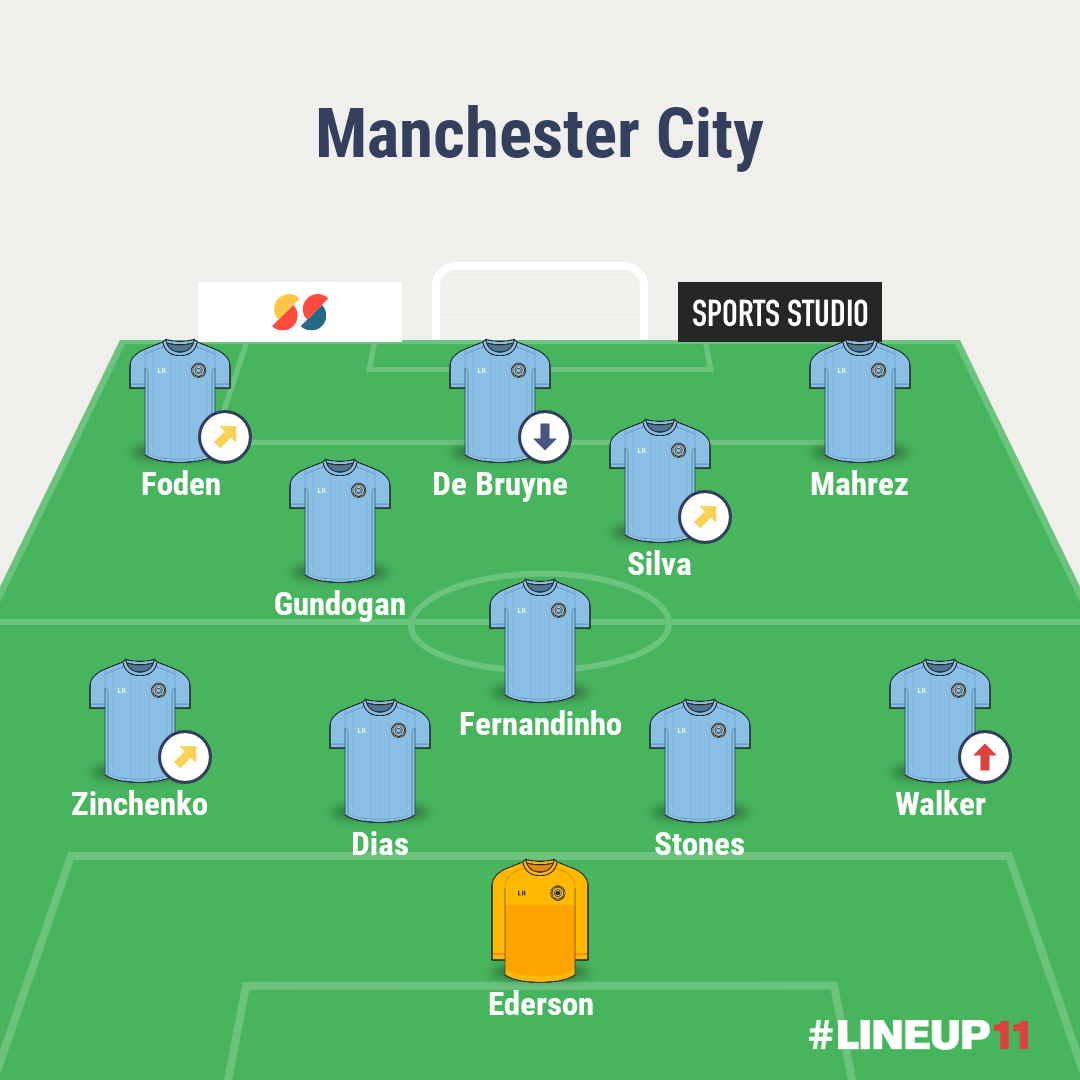
This was their standard, on paper formation, with the arrows representing general movements of the players on the field.
City would alternate between pressing in a 4-4-2 high/mid-block and a 4-3-3, while in possession were free-flowing and alternating.
Foden and Mahrez would both stay wide before coming inside when receiving the ball (similar to the way City play), although Foden would sometimes come inside with Zienchenko overlapping when he’s not in midfield.
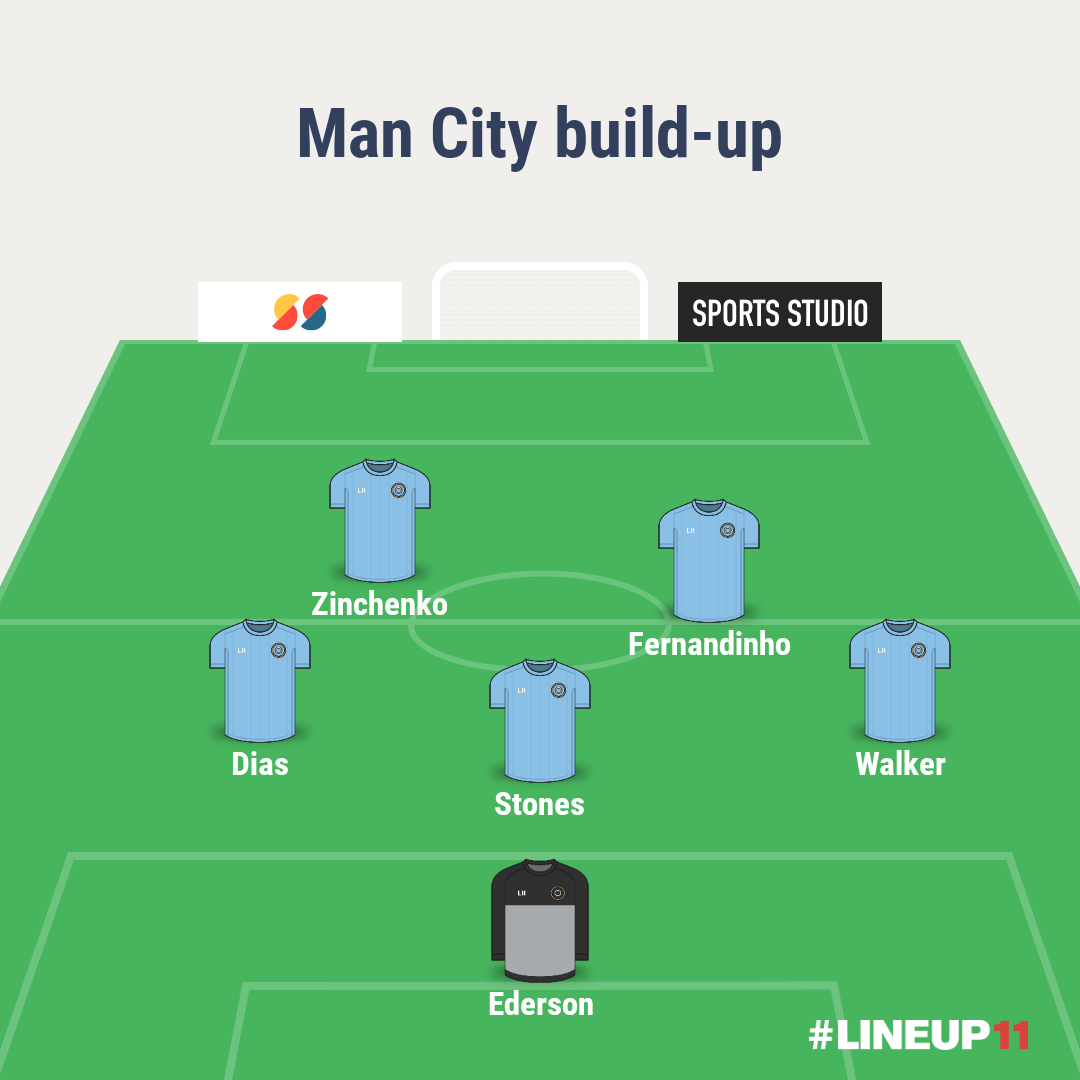
In general, City built up with a 3-2 system to move the ball forwards.
Both of the centre-backs would remain in the defensive line while one of the full-backs would join them to form a back three.
The other of those fullbacks would go high and wide or come inside with the defensive midfielder.
If the fullback went forwards, then one of the central midfielders (usually Ilkay Gundogan) would drop in to form a two in midfield.
Essentially, City’s build-up would either look like this:
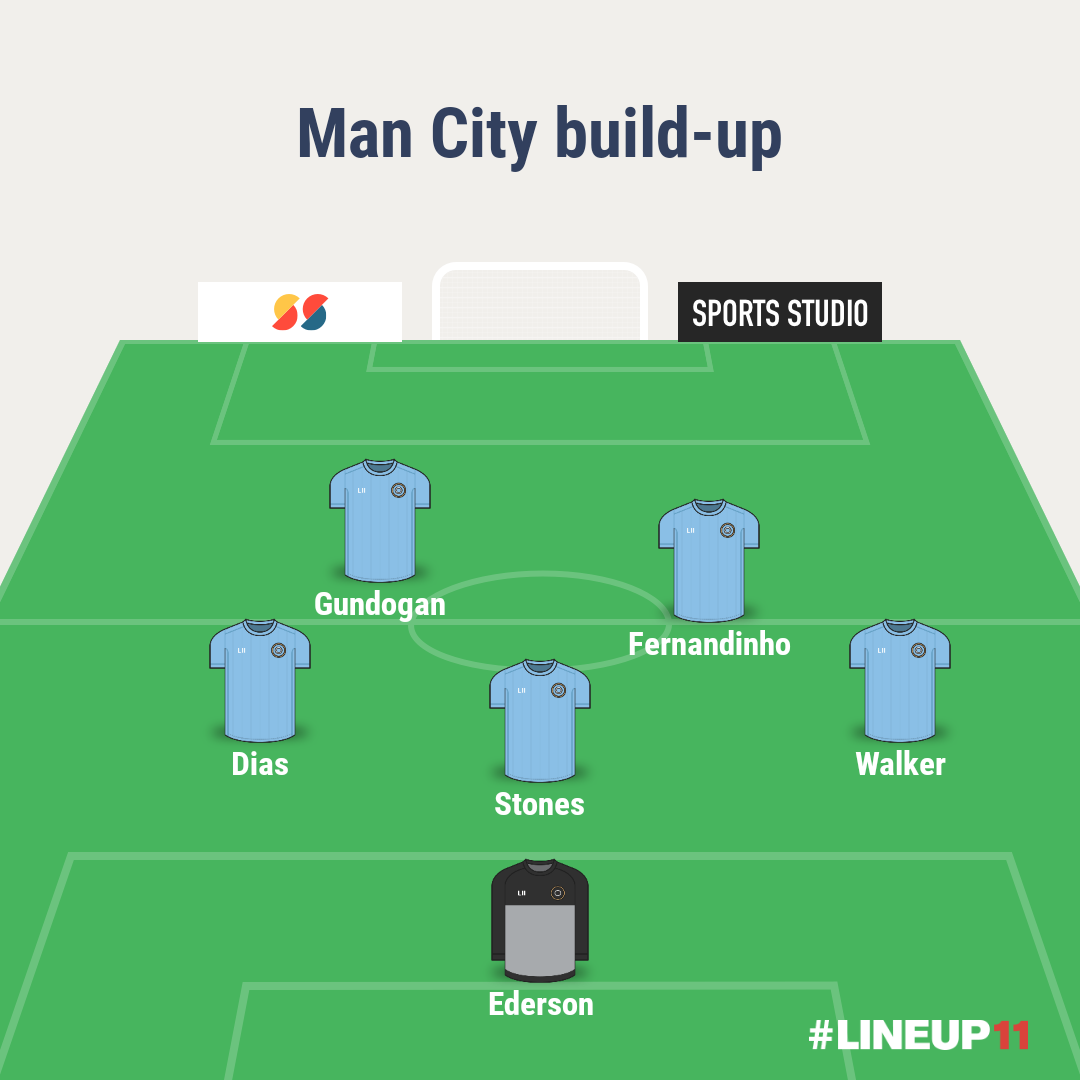
Or this:
Melbourne City builds up in the exact same way, with one of the fullbacks joining Aiden O’Neill in central midfield and the other creating a back three:
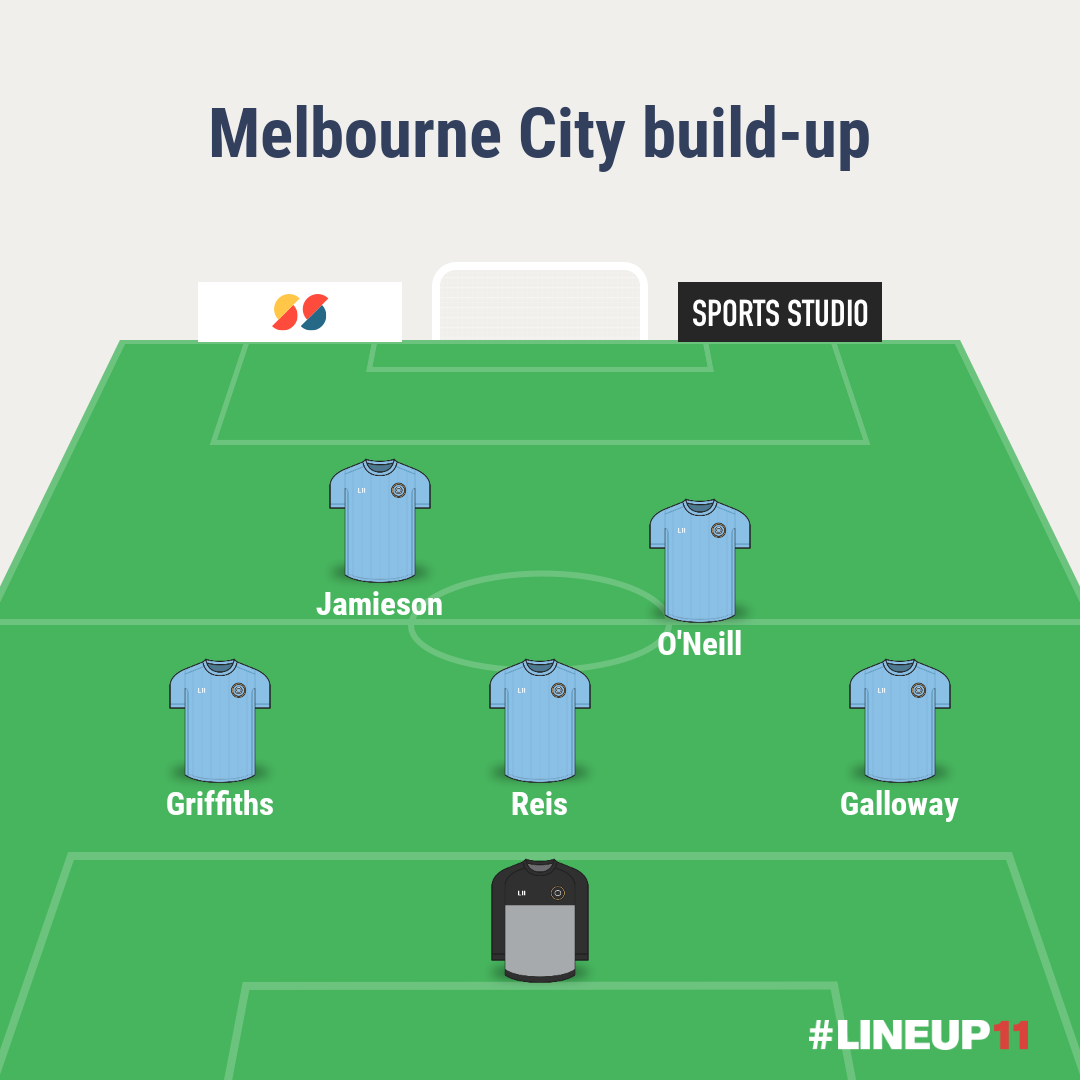
(On the presumption that Rostyn Griffiths and Nuno Reis will start at centre-back together with Good on Socceroos duty.)
However, where it gets interesting is the midfield/striker.
Kevin De Bruyne, while listed on paper as leading the line, is not a centre forward.
He would drop deep to pick up possession and alternate with Bernardo Silva, Gundogan and sometimes Foden to take up the highest position on the field.
One can call him a ‘false nine’, but it’s more of a free-flowing, strikerless system whereby 3 or 4 players rotate positions to devastating effect.
Melbourne City, with Jamie Maclaren absent, should look to do something similar.
They have an abundance of players who are good in tight spaces, like their parent club, and, without another recognised striker on their books, should look towards playing a strikerless, false nine system.
They played that very system in their 1-1 against Melbourne Victory two matches ago, with Marco Tilio on paper leading the line. Tilio consistently dropped deep and consistently found himself in space to drive forwards.
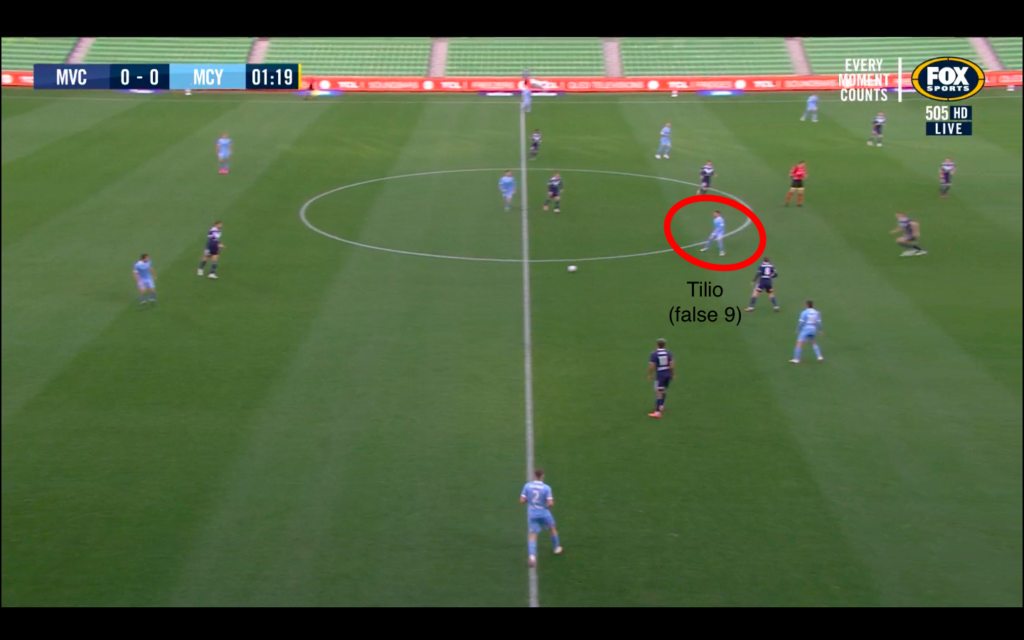
His fantastic first touch allowed him to hold up the ball, and his balance and tight control allowed him to breeze past defenders, before using his technique and vision to shoot or pass respectively.
His profile is similar to Lionel Messi – they are both left-footed, diminutive dribblers, with the Argentinian excelling in this same system under Pep Guardiola.
Florin Berenguer and Adrian Luna, who started as more advanced central midfielders would also rotate and make runs beyond Tilio, similar to how City play with their system.

In this match, with City so dominant and congesting the midfield (at least in the first half), We didn’t see the usual 3-2 build-up progression, as Melbourne Victory allowed City’s deeper midfielders to turn and look forwards.
Because of this, Adrian Luna would often come deeper to pick up the ball and progress it forwards.
Tilio coming off the front line confused the defence. Neither of the two centre backs wanted to engage or go with him, as they would leave a hole in the backline.
Plus Tilio has a solid touch and ball control that he likely would have rounded them.
In the match after, against Newcastle Jets, they played with Stefan Colakovski upfront, who played as a straight nine.
However, for the finals, they should look to implement the Guardiola strikerless system.
While Colakovski performed well against Newcastle, the Jets are leaky at the back, having conceded 38 goals this campaign.
Colakovski doesn’t have the finishing ability that Maclaren possesses, and without that City should look towards a strikerless system with Tilio as the false nine, as they did in the 61st minute when Colakovski was subbed off.
City thrives when their two wide players, Noone and the (perhaps injured) Nabbout have time on the ball out wide, and Tilio coming deep allows that.
In addition, Tilio is excellent when running at defences, and can consistently do that playing in a more central position.
While Melbourne City hasn’t managed a win in their last three matches (two without Maclaren), examining a Guardiola-esque strikerless system could be what sees them claim their first ever grand final in Patrick Kisnorbo’s inaugural season at the helm.
Featured Image Supplied: Melbourne City
